The UCLA Police Department Communications Center is staffed 24 hours a day by trained public safety dispatchers. The dispatchers receive calls from 9-1-1 and the non-emergency business lines, and assign police officers, firefighters, paramedics/EMTs, CSOs and parking enforcement officers as appropriate.
Crimes occurring on the UCLA campus can be reported in person or by calling the UCLA Police Department any time of the day or night. Crimes occurring off campus should be immediately reported to the law enforcement agency that has jurisdiction where the crime occurred. Students, staff and faculty who have been victimized in the Westwood area, even if not on campus, have the option of reporting the crime to the UCLA Police Department. The University strongly encourages students, staff, faculty, patients and visitors to report all incidents to the UCLA Police Department at once, regardless of their nature, for crimes that have occurred on campus or in the Westwood area.
Emergencies requiring police, fire or medical aid can be reported to the UCLA Police Department Dispatch Center by dialing 9-1-1 from any landline telephone on campus, by using one of the many Emergency Reporting System (ERS) call boxes, or by dialing 9-1-1 from your cell phone.
Non-emergency calls for assistance can be reported by dialing the UCLA Police Department at (310) 825-1491. Upon reporting a crime, traffic accident, injury accident or other incident, the appropriate police response will be initiated.
Members of the campus community are encouraged to immediately report suspicious activity to the Police Department. Crimes can be averted by the proper reporting of suspicious activity. If someone’s actions are out of character and you become suspicious, call the Police Department. Let us assess the situation, and if appropriate, take some action. Do not hesitate to call! We also invite the reporting of physical hazards so they may be corrected to avoid personal injury.
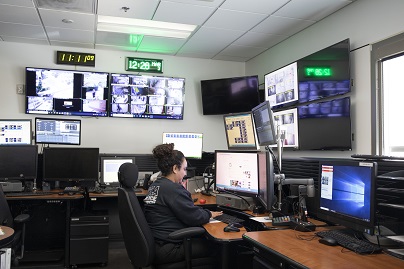
Crimes in progress and crimes which have just occurred should be reported immediately by dialing 9-1-1 from your cell phone, a campus landline phone, or one of the many ERS call boxes on campus.
Business related calls such as requests for information or reports of crimes that occurred earlier in the day should be directed to (310) 825-1491 or extension 51491 from a campus landline phone.
Whenever possible, please have the actual victim or witness of the crime call the Communications Center directly. Firsthand information is always more accurate and complete. If someone merely gives you the information and leaves, please include that information to the person who answers your call.
Threatening behavior should be reported to UCPD as soon as possible.
In rare situations when someone is unable to speak to a dispatcher, they may text 9-1-1 to reach emergency assistance. Texting 9-1-1 is never a substitute for calling, except for those who are hearing impaired or find themselves in a situation where speaking with a dispatcher would put them at greater risk of danger or harm. In a campus-wide emergency, the texting feature may not be available. In cases of a campus-wide emergency, calling 9-1-1 is the best way to reach campus safety officials and to obtain assistance.
For emergencies, dial 9-1-1 from any campus landline phone, campus ERS phone, or cell phone. Today, approximately 65% of UCLA Police Department’s 9-1-1 calls are received by way of callers using their cell phones. UCLA community members dialing 9-1-1 on their cell phone are usually put through directly to the UCLA Police Department’s Communications Center for immediate assistance with their emergency. On occasion, depending on the caller’s location on or around campus and which cell phone tower receives the cellular call, a 9-1-1 call may go directly to the Los Angeles Police Department’s Communications Center or to the California Highway Patrol. LAPD and CHP dispatchers will then either transfer your call to UCLA Police Department’s Communications Center, or they will take the information needed to be able to handle that call, and will call the UCLA Police Department’s Communications Center and pass on the information to the dispatcher in order for the appropriate emergency services can be dispatched.
The advantage of dialing 9-1-1 for emergencies, as opposed to using the non-emergency police business line, is that when the police dispatcher answers a 9-1-1 call, the police dispatcher receives valuable pertinent information on their computer screen, such as the general location of the caller, the cell phone number, and the name of the person registered to the phone. This information can prove to be very valuable if for whatever reason the caller is unable to speak with the police dispatcher or is uncertain of what their location is. That valuable information is not received by the police dispatcher with calls that come into the Communications Center on the non-emergency police business lines.
For each call received, a public safety dispatcher will ask a series of structured questions while a second dispatcher will be sending the appropriate assistance to your location. Listen carefully to each question and try to answer it as best you can.
